The short answer
ArcticPoint HVAC Repair installs central air conditioners and heat pumps in Scotts Valley homes. We size the system to your house, check ductwork and electrical capacity, and handle placement and permits. Many homeowners choose a heat pump because one unit handles both cooling and heating.
Many homes in Scotts Valley were built without central air because the area stays fairly mild for much of the year. When warm spells do arrive, an upstairs bedroom or a room with afternoon sun can get uncomfortable fast, and window units only go so far. ArcticPoint HVAC Repair installs central air conditioners and heat pumps for Scotts Valley homeowners, working out of our base in San Jose about 17 miles to the northeast. This page covers what an AC installation here usually involves, the decisions worth making before you buy, and what to expect on install day.
Start With the Right Size, Not the Biggest Unit
An oversized air conditioner cools the air quickly, then shuts off before it has removed much moisture. The result is a room that feels cool but clammy, plus more wear from frequent starts and stops. An undersized unit runs constantly on warm afternoons and may never catch up.
Before we recommend equipment, we do a load calculation for your specific home. That accounts for square footage, insulation, window size and direction, ceiling height, shading from trees, and how many people live there. Homes on wooded lots often need less cooling capacity than the square footage alone would suggest, while rooms with large west-facing windows may need more airflow than the rest of the house.
Central AC or a Heat Pump?
A traditional central air conditioner only cools. A heat pump uses the same basic equipment to cool in summer and run in reverse to heat in winter. If your furnace is aging or you want to move away from gas, a heat pump can replace both jobs with one outdoor unit.
For homes without any ductwork, ductless mini-split heat pumps are another option. They mount on the wall in individual rooms and connect to an outdoor unit through a small opening, which avoids running new ducts through walls and attics.
- Central AC: a good fit if you have a newer furnace and only need cooling.
- Ducted heat pump: cooling and heating from one system, using your existing ducts.
- Ductless mini-split: zoned comfort for homes or additions without ducts.
What We Check Before Installation
A new system is only as good as what it connects to. During the estimate visit, we look at the parts of your home that affect how well the equipment will work.
Older ductwork in attics and crawl spaces is often leaky or undersized for cooling, since it was originally designed for a furnace. We inspect it and tell you plainly whether it can be sealed and reused or needs changes. We also check your electrical panel, because adding an air conditioner or heat pump requires a dedicated circuit and enough capacity to support it.
- Duct condition, sizing and leakage
- Electrical panel capacity and circuit availability
- Outdoor unit location, clearance and noise toward neighbors
- Indoor coil and air handler access
- Condensate drainage path
- Thermostat compatibility
Placing the Outdoor Unit on Hillside and Wooded Lots
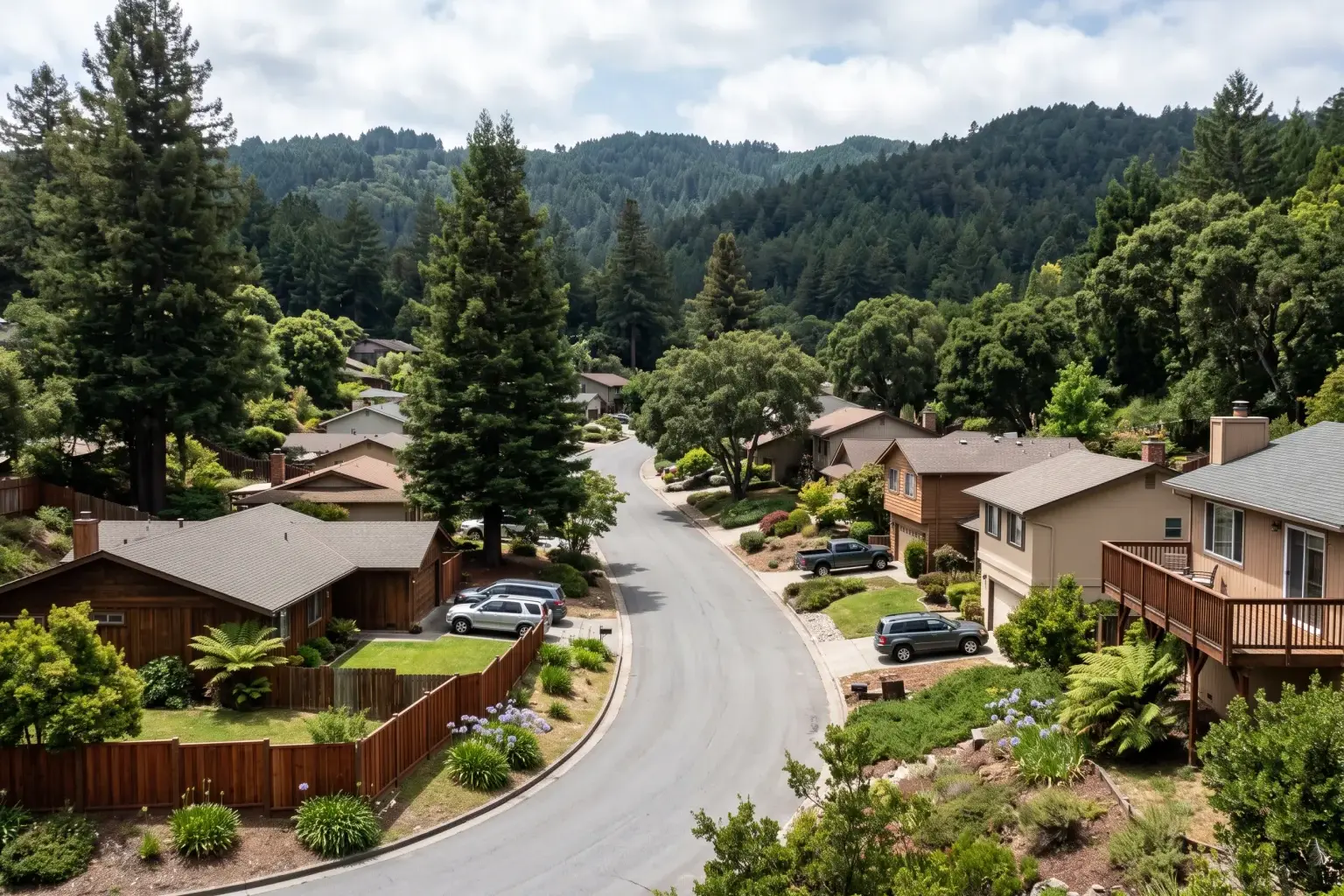
Many Scotts Valley properties sit on slopes or under mature trees, which affects where the outdoor unit can go. It needs a level, stable pad, enough clearance on all sides for airflow, and a spot where falling leaves and needles won't pile up against the coil. We also consider how close it will sit to bedroom windows, both yours and your neighbors'.
If the best spot for performance is a long way from the indoor equipment, we explain the tradeoffs so you can decide with full information.
Install Day and Afterward
Most installations follow the same sequence: removing any old equipment, setting the outdoor unit, installing or replacing the indoor coil or air handler, running refrigerant lines and wiring, and connecting the thermostat. We then test the system, check refrigerant charge and airflow, and walk you through the controls.
We pull the required permits for the work. After installation, we recommend a yearly maintenance visit to keep the coils clean and catch small problems early. If something goes wrong after hours, ArcticPoint offers 24/7 emergency service.
Rebates, Credits and Local Rules
The federal Energy Efficient Home Improvement Credit for heat pumps applied only to systems placed in service before December 31, 2025, so it does not cover new installations. Local incentives for heat pumps and electrification come and go with each funding cycle. Check with your local clean energy provider for current offers; we confirm what is available before including it in a quote.
Scotts Valley is in Santa Cruz County, so the appliance rules that apply here can differ from those in our Santa Clara County service areas. We can help you confirm which rules apply to your home before you plan a replacement.
More services in Scotts Valley
- AC Repair in Scotts Valley
- Heating Repair in Scotts Valley
- Heat Pump Installation in Scotts Valley
- Furnace Repair in Scotts Valley